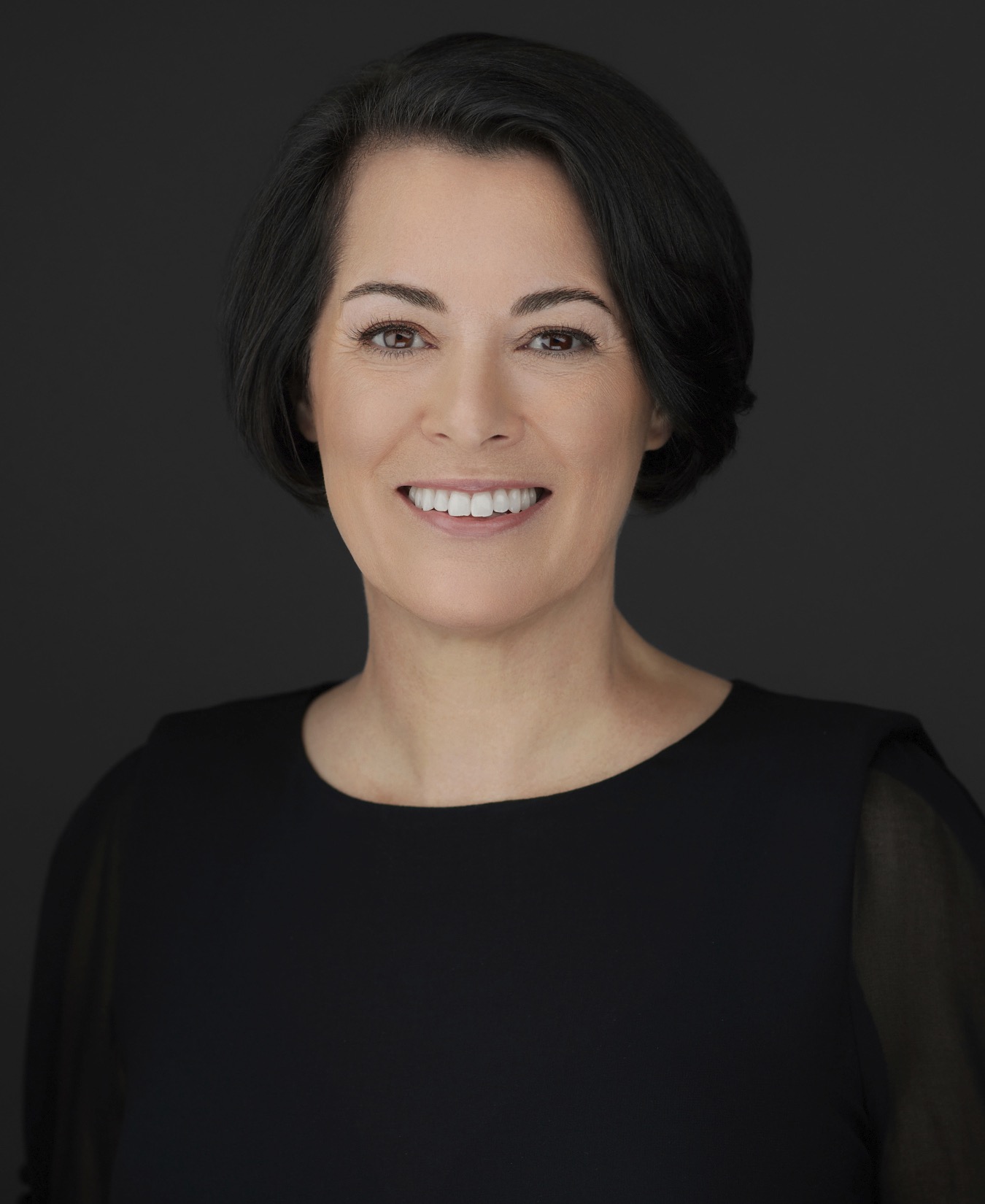
Sean: So with all the fancy introductions out of the way, welcome to the podcast, Nicole Malachowski.
Nicole Malachowski: Yeah, it's a delight to be here. Thanks for having me, Sean.
Sean: Oh, trust me, the pleasure is all ours. So, after 21 years in the Air Force and everything that you've done since working with the White House, being out on the speaking circuit that you're going to do for us at PACK EXPO for PPWLN, is there a definition of leadership that you've landed on that might be different than what you believed early in your career?
Nicole Malachowski: Yeah, I think early on in my career, I didn't have the full understanding of how much leadership was about developing other people. I kind of saw leadership as being solely about getting the mission accomplished or executing the mission that was assigned to me. And I learned over time, I think through age, maturity, and experience, that true leadership really is about bringing the best out of the people that you're responsible for.
Sean: Interesting. So do you think that's something that kind of evolved from a military background too where it seemed like the goal was the mission in the military and then as you were in it, you realized that bringing the team up to speed is just as important as the end game?
Nicole Malachowski: Yeah, I do think some of that has to do with just the military systems itself. When you start out very young as a young lieutenant, you might be just leading yourself or maybe one other aircraft around. By the time I had advanced 15 years into my career and I'm commanding an F-15E fighter squadron, given billions of dollars in flying hour program equipment, responsible not only for the personnel assigned to me, but also their families, I think you start to see that bigger picture. Some of that, again, is because of the organizational talent management pipeline, the amount of years of experience it takes, and some of it's just based on life, wisdom and maturity. By the time you approach 40 years old, you're starting to figure out it's not about just you or just getting the mission accomplished as much as making sure that you're developing people in a way that the mission can continue without you. That somehow you're laying down that long line or thread that will continue to propagate into the future.
Sean: I like that. That's great. So you've led teams in some really, really high-pressure environments, whether it was in combat, precision flying for the Thunderbirds, or squadron command. What's something about building trust on a team that you think leaders might get wrong, that is something that's kind of widely believed as being a leadership quality that maybe isn't everything that it's cracked up to be?
Nicole Malachowski: I'm so glad you asked this question because I think this is a vital thing that leaders need to understand. I believe the foundation and cornerstone of elite team performance is actually vulnerability. Yeah, a lot of times when we use that term vulnerability, it can make people feel a little bit uncomfortable or that it's a little bit touchy-feely. But I discovered, especially in an F-15E combat squadron, the teams that can honestly harness this idea of vulnerability through their behaviors, decisions, and actions are really the ones that can take that level of performance to the next level. And especially when you look at fighter pilots, outsiders might look at fighter pilots and think that we're ultimately confident or that we're totally type A and everything goes right and we're just hardcore. At the end of the day, I think what makes fighter pilots in the fighter community so special is that we are very vulnerable with each other, very transparent, very open. When we train, we hold each other to a standard. And there's nothing that's personal about it. There's nothing emotional about it. It's all about how do we hold each other to a standard in a way that we can all learn from mistakes and in a way that we can all move forward stronger together as a team.
Sean: That's really interesting 'cause unfortunately you hear vulnerability and you think weakness. And I don't think weakness, but that's just been attached to it. And it's such an interesting thing to hear from someone in such a high-pressure environment.
Nicole Malachowski: Yeah. And when you say vulnerability, you think weakness. "I'm a failure. I'm not up to snuff. I'm not meeting the standards. I'm not as good as everybody else." When in fact, I think demonstrating vulnerability as a leader is one of the greatest gifts you can give your team. Because by demonstrating it yourself as a leader, you are enabling and empowering those who are working on your team to do that too. Don't you want them to ask for help when you need it?
Sean: Yeah.
Nicole Malachowski: Don't you want them to be very transparent and open when things don't go according to plan, when maybe there's a gap in resources, a gap in knowledge, or maybe you're falling short of whatever objectives or measurements you have? So demonstrating that vulnerability yourself as a leader is the thing that empowers the rest of your team to do the same.
Sean: Very interesting. And I think this might kind of lead into the answer to my next question, but I'll ask it anyway. A lot of our listeners, we're in packaging and processing, we're in manufacturing as a larger scope of what we do. And right now they're managing teams through kind of constant disruption. There's a huge labor shortage that we deal with every day. Automation is coming in, which is making things different from how they were in the past. Supply chain shocks with the global economy, that's just something that we deal with every day. What separates leaders who adapt well to that kind of pressure from those who don't? Is it vulnerability? Is it something else? What is it that they could do best to kind of adapt?
Nicole Malachowski: Yeah, you're right. I mean the pace of change is completely just faster than it's ever been. It almost feels I think chaotic in any environment. And I do come back to this idea of vulnerability as a leader in admitting, look, I don't necessarily have all the answers. And leading people through change by saying, "Here is our target goal, but it's okay if we have to adjust along the way. Maybe our priorities last year need to adjust this year. I would like your input. Where do you think we should be going? And what kind of feedback can you give me as a leader to make sure that we're meeting this goal and meeting this change?" I think change makes people nervous, right? "What if we fail? What if we don't hit that target?" Acknowledging as leaders that this path to success is going to be nonlinear, I think, is step one. And when you show confidence and calm in making that statement, that confidence and calm is going to translate to the rest of the team.
Sean: And I feel like, again, not to harp on vulnerability, but as it's kind of been a thread in the last couple of questions that we've talked about, I feel like that has to be empowering to your team to kind of lump them in and bring them into the decision-making versus just be dictating to them.
Nicole Malachowski: Oh, absolutely. People want to know that they've got skin in the game. They want to know that they're being keen for their individual strengths and their individual contributions. I talked to some leaders across corporate America, and they're like, "Well, I've got 100 people on my team or 200 people on my team. How am I supposed to tailor my care to each of them? I don't have enough time." And I literally just completely vehemently disagree with that. I always tell leaders, "You make time for the things that are important to you. And when you don't make time, people realize that they're not necessarily maybe important." And I will always tell leaders, "You need to put people over process always."
Sean: Okay. People overprocess. I like that. That's a good takeaway. So you are obviously a woman in a leadership position in a heavily male-dominated profession. And we see that a lot in manufacturing. And again, you're going to be speaking at the Packaging and Processing Women's Leadership Network, which tries to help women in leadership roles just deal with that reality, which is what it is. A lot of women in manufacturing face the same kind of challenges that you faced, where you were the only woman in the room. So what advice do you have for how you kind of flourished in that role?
Nicole Malachowski: I think a lot of times, too, when I get asked this question, 'cause I get asked it a lot, the advice that I'm going to give here, I hope, is applicable to both women and men. The first thing is, every day you come into work, ask yourself, "What can I do to be a master of my craft today?" You want to be so good, so credible, so reliable in all circumstances that if anybody on your team across the company, especially a client, has a question about what it is that you do, you want them to know that you're the source. You are the answer. So be a master of your craft. I think sometimes when we get that feeling of maybe not belonging or the feeling of self-doubt, I'm the only woman in the room kind of thing, it's important to remind yourself of your why. Why is it that you chose this profession? Why is it that you've stayed in this career for so long? Because the people who can define their why are the ones I think can more safely navigate change, hardships, criticism, and naysayers. And I think finally, especially for women in the room, I would say believe those who believe in you. It's very easy for us to focus on the negative and the naysayers, but if you step back and look at the strategic picture, the vast majority of men who work alongside us are very supportive. And so we need to actively choose to surround ourselves with those people. And when they say, "Look, you're ready for the next promotion. We want to grow your portfolio. We're going to give you our best client. You're ready," believe them. They have a vested interest in the success of the company, and that means they have a vested interest in your success.
Sean: How about navigating situations where maybe it doesn't feel like everyone has your best interest at heart? How do you, as a leader, sort of push through that?
Nicole Malachowski: Yeah. And I think whether you're a leader at the earlier levels or a leader at the most C-suite levels, at the end of the day, only you get to define success for yourself. And I always tell people, "Don't ever let any other person, company, organization, team, outside entity define what success should look like for you." And also, this definition of success can and should change over time.
Sean: Right, right.
Nicole Malachowski: Yeah, exactly. I mean, you've chosen this career, you've chosen to be in this career field. Define what success looks like for you and stay true to yourself. I am a very much a woman who believes in leaders leading with values, not only in the organizational values, but also values in and of themselves. So, for example, in the Air Force, we had a set of values which was integrity first, excellence in all we do, all of this. And I think a lot of companies have that. They have mission statements, culture statements, and value statements. And those things are important because those are the things that allow teammates to align in pursuit of a mission. But I also think that we as individual human beings need to wake up every morning and say, "What are my personal values, my individual values? And how do I stay consistent with those values as I navigate a very chaotic environment?" And the people who can literally define those values and hold themselves accountable to them every day, again, are the ones who navigate the turbulence into the change a lot more efficiently than other people.
Sean: Beautiful. This has been great. And I just had one little question I kind of wanted to tack on to the end of it. You've given tons of great advice and great takeaways that I can already think of that I'm going to use, but if you had to give one piece of advice to someone who's stepping into a leadership role for the first time, whether it's a young professional or maybe it's a more veteran professional that's being put into a different role, what would that piece of advice be?
Nicole Malachowski: It's going to sound maybe a little bit trite, but you've got to be authentic. Be authentic. Lead in your style. It's okay to learn from other people's leadership style, to take a little bit and pieces here and there, but you have to be completely authentic in the way that you are leading. Something that has fidelity to who you are because people can sense a lack of sincerity and a lack of authenticity from 10 miles away. And when people sense that, it doesn't feel real or genuine. And so I would say stick with who you authentically are. Just because someone leads a certain way doesn't mean that you have to lead that way. People will resonate with leaders who are authentic.
Sean: Well, this was fantastic, and that was fantastic. I can't wait for the show to come so that I can see your presentation or the keynote at the Packaging and Processing Women's Leadership Network breakfast. I'm sure it's going to be excellent. But thank you for taking a little time, Nicole, to come on here and give us a little taste of what you're going to talk about and kind of lead us through what it's like to be a leader in today's world.
Nicole Malachowski: Well, thank you for having me, Sean, and I'll see you in October.