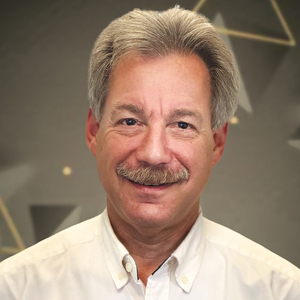
Sean Riley: You are listening to UnPACKed with PMMI, where we share the latest packaging and processing industry insights, research, and innovations to help you advance your business. Hi, and welcome to UnPACKed with PMMI. I'm your host, Sean Riley. In this episode, we get ahead of PACK EXPO International with CEO Charles Weinberg as he shares his team's proven playbook for tackling the show floor, from pre-show homework and vendor meetings to sending mechanics to scout new technology firsthand at the show. He also digs into the automation, robotics, and AI trends reshaping the packaging industry that attendees should watch for on the floor this year. Let's have a listen. So with all the fancy introductions out of the way, welcome to the podcast, Charles.
Charles Weinberg: Glad to be here, Sean.
Sean Riley: Oh, the pleasure is all ours. So you've spent a long time in manufacturing, more than 40 years. What's the biggest change you've seen over the course of four decades in this business?
Charles Weinberg: It's really interesting because it's hard to pinpoint one thing that is the biggest change. I think we've seen different changes at different times. I'm old, right? As you said, more than 40 years. So I think one of the first things, back 30 plus years ago, was the addition of more and more women into the packaging industry, which I think is a fantastic thing, and more diversity in the engineering world. So getting a divergence of ideas, new thoughts, new ways of looking at the same problems, I think, was a really big step back 30 years ago.
Then the next step that started to come was automation, right? If you remember back in the days, everybody said, "Oh, computers are going to eliminate paper, and they're going to change the world." And PLCs and computers in manufacturing certainly did. They made the machinery much more versatile to be able to program and do different things. But at the same time, they added a complexity that didn't exist in the fact that machinery used to be much more mechanical, so it was easier for people to troubleshoot. So the new technologies that came along required a different skillset for the workers to understand. And then that morphed into the move into AI and robotics.
And so once again, the skillset and making sure that you had employees and technicians who were able to work with the equipment because it was so different from what it was 40 years ago. And then most recently, I think the change that we've seen over the past probably 15 to 20 years is much more international equipment, right? Everybody talks about the Chinese, but the Koreans, the Italians, a lot more European companies have set up shop, if you will, in the United States to support packaging equipment and support a lot of what we do, not only in contract manufacturing, but within the CPGs and other companies that utilize a lot of packaging equipment. I think these trends are great for the business and great for manufacturing. They support competition. They provide better ideas in terms of how to attack problems, and they certainly keep us on our toes.
Sean Riley: Yeah. So you mentioned contract manufacturing, and that's kind of your domain. Just a little bit, if you could, about how that differs from traditional CPG manufacturing or how they're handling packaging.
Charles Weinberg: Yeah, there are probably two ways that it differs, and it's two F words, fast and flexible. So we can do things a lot quicker than CPGs can. Typically, they're going to have to go to a board of directors for a new line installation or things of that nature. And we can do those things with either existing capacity that we have or with very quick speed to markets. We can be a lot faster in getting products to market in many cases than they can. And then it's flexibility, our ability to do a variety of different things across our network. If a CPG is coming out with a new product or a line extension that they don't have the technical capability to do, we have that flexibility in many cases to start semi-automatically or even manually to prove the concept of the new product introduction. And then if it takes hold, we can add automation and capacity very quickly to help them continue to grow in the marketplace.
Sean Riley: Yeah. And fast and flexible is what everyone is always looking for, so that has to be a good thing on your end. You kind of touched on automation a little bit, and the impact that's had, and I figured that would be a big one. How are things with automation beyond the workforce? How are things like that changing the way MSI Express operates and the jobs that people are doing in your facility? How is that moving things around?
Charles Weinberg: I'm going to deal with those as two separate things. Automation and robotics is one and AI as a separate entity because I think they're dramatically different.
Sean Riley: Yes.
Charles Weinberg: So automation and robotics, first of all, robotics, everybody's always talked about oh, robots are going to replace humans, et cetera. And in some cases, they replace some manual labor, but they also drive a need for a totally different employee. Someone with a lot more technical troubleshooting skills and the ability to maintain equipment that is a lot more complicated than a simple conveyor or a simple pneumatic pick in place. They can certainly improve the operations. With robotics, what we've seen is that they really started in the auto industry decades ago, and they've become much more cost-effective. Where it used to be maybe 300,000 to half a million dollars to install a robot, you can get robots and cobots for the $100,000 range to do everything from palletizing to parts picking in a variety of different ways.
So it's become much more cost-effective, and they've also become a lot more user-friendly. So instead of the need for someone to be a programmer, if you will, you can walk a robot through a task, and it now knows how to do that task. So the teaching by mechanics, operators, et cetera, has become a lot easier with robotics. So that interface has been a huge change in the robotics world within the past 5 to 10 years that makes it a lot easier to integrate into the workplace. Now, when you start talking about humanoid robots, I think we're still a long way away from that.
Sean Riley: Yeah, I agree.
Charles Weinberg: Will it happen over time? Yeah, in some cases. But like I like to say, robots can't turn wrenches effectively. They don't necessarily troubleshoot equipment problems. It's hard for them to discern the difference between a machinery problem and/or a material problem, right? Because in troubleshooting, you're going to look at man, machine, materials, and environment. Robots can't do that. So now you start going into the AI realm in terms of how AI looks at our data and basically assesses that to help troubleshoot problems and help drive continuous improvement in a manufacturing environment. Easier said than done. The key is, we've heard it for decades, garbage in, garbage out with regard to data, so ensuring that we have good data.
And that relies a lot of cases on people still to put in a downtime reason, a downtime code, right? Because even if a PLC or a computer can say, "Oh, this portion of the machine went down, and it went down for 37 seconds," or, "This portion of the machine went down and went down for five minutes." Well, why? The system doesn't know that typically. So we still count on human beings, and I think we're a long way off before that data can be automatically gathered and understood to determine the root cause of the downtime. And when we look at troubleshooting, the first thing we teach people is to clean equipment, right? It could be a dirty photo eye, it could be a blocked sensor, it could be a conveyor that has a buildup on it now, so it's now running intermittently and not running smoothly, and that's throwing off the timing of sensors or photo eyes, things of that nature.
Well, it's hard in some cases for systems to understand that. So step one is operators doing daily routinized cleaning, inspection, and lubrication, what we call CILs. That is a critical part of maintaining a daily operation that runs very efficiently. AI can help with that in terms of identifying where downtime is, but boy, it still takes people to assess that, understand that, and then determine what the appropriate step is, in my opinion.
Sean Riley: Okay. That's completely understandable. So we're here to talk PACK EXPO. What does MSI Express look for when it's a big show? When you go into a show, what's your plan of attack? What are you looking for when you're evaluating new technology at the show?
Charles Weinberg: So my parents would love this. So we actually do our homework before we go to PACK EXPO. So we typically sit down with our engineering teams as well as our operations leaders and say, "What do we need to look for? Where do we have opportunities? What equipment do we have that maybe we're not happy with, that we want to look for replacements for? Where are we having operational issues or capacity needs where we need to go look for equipment?" So that's one way that we look at PACK EXPO in that regard. And then we'll set up and identify a path through PACK EXPO, because in Chicago and Vegas, they're big, right?
Sean Riley: Yeah, they are.
Charles Weinberg: It takes days to go through it. And then secondarily, we'll set up meetings with specific vendors that we want to meet with. So whether it's new vendors, existing vendors, or vendors that we have machinery orders with, we'll set up meetings with them because it's a great opportunity to get a lot of things done in a short period of time. And then the other piece we'll do is we will basically just have relationship meetings to understand what new technologies or what things our current vendors have come up with or are working on that we may not know about. And once again, you can set up a lot of those meetings in a matter of days, versus our vendors traveling to us from all over the world or us having to travel all over the world to go meet with them.
So we really look at it as a fantastic opportunity every year to identify where our needs are and who can best meet our needs, continue to build strong relationships with our vendors from a continuous relationship improvement standpoint, right? And then just wander sometimes just to say, "Whoa, look at that. We didn't expect to see that here." And we'll typically divide and conquer because there are so many things to see and so many opportunities at PACK EXPO.
Sean Riley: That's awesome. That's a great response that reads something out of a brochure for how to attack PACK EXPO. I really like that.
Charles Weinberg: The other thing we like to do, especially in Chicago, because we have so many facilities in the Chicagoland area, is send our maintenance mechanics-
Sean Riley: Oh, very interesting.
Charles Weinberg: ... to the show for a day so they can walk through and see the new technology ideas, because a lot of our continuous improvement comes from our mechanics. They're a big driver of small projects, small improvements. So, seeing the new technology, seeing the equipment that we have that maybe has evolved over 10 years, 20 years, 30 years from what they work on, it's also a real benefit for them in being able to go to PACK EXPO.
Sean Riley: Yeah, that's a very interesting way of approaching it. I like that a lot. Do you have any examples of maybe some connections you've made that may have led to a new solution, a partnership, or something that came out of a PACK EXPO for MSI Express?
Charles Weinberg: More than one. I'll pick a few. So, for example, we try to build, and I've been doing this for a long time because I felt that partnering with OEMs and partnering with people who are at PACK EXPO is really a benefit for both parties, right? OEMs design machines, but they don't run the machines. We run the machines, and we don't build them. So, making sure that there's feedback from us back to our vendors, and this isn't just at PACK EXPO, but it's throughout the useful life of the equipment. And setting up intermittent meetings at our plant sites with our vendors, with our mechanics, our operators, our engineers, to continuously improve the equipment and provide feedback to our vendors is really important to us. And we use PACK EXPO to help reinforce that.
So, for example, we work with Spee-Dee Packaging, which does a lot of auger fillers, volumetric fillers, and rotary fillers for us. And we set up intermittent meetings not only at PACK EXPO, but at our plants to work through continuous improvement. Because we believe that if we can provide them with ideas to make their equipment better, it's going to help us the next time we buy another piece of equipment. And then we get to beta test a lot of these things and get an advantage that maybe other people won't have because we create this mutual continuous improvement mentality between our companies.
One of the other vendors that we've spent time working with is Delkor. And based on our feedback, Delkor has done a really good job of a quick ship program because we talked about being fast and flexible as contract manufacturers. So being able to get machinery within weeks is something that's really important to us. And they've done a fantastic job of creating a quick ship program or helping us get tooling in an expedited manner that really helps us meet our customers' needs.
Viking Masek is another company that we do a lot of work with on form, fill, and seal machinery. And we're working with them on a variety of different package formats. How do we drive the continuous improvement of integrating fillers with their technology? How do we do a better job of driving more uptime and better preventive maintenance? What's the mean time between failures on heaters or seal bars? And what preventive maintenance should we do on what frequency, based on the data that we collect, that we can then share with them that they have from the field? Because they'll build a piece of equipment, put it out in the field. And in many cases, if they don't get a service call, they don't know what went wrong.
Sean Riley: Yeah, right.
Charles Weinberg: I think this is a place where AI can be really beneficial in the sense that OEMs sell parts, and they have so much data on how often they're selling parts that go to which machines, right? How do we use AI to understand mean time between failures, understand what is happening with regards to the parts on machines that are failing prematurely, and then help set up better maintenance programs for their equipment, better CIL programs in the field that help drive higher reliability for the equipment that we do? I could go on and on. There are other vendors that we go meet with. We use a lot of Yamada scales. Talking with Yamada about the continuous improvement of all the different varieties of packaging that we do. PACK EXPO is a great opportunity for us to sit down with folks like that and drive better business.
Sean Riley: That's perfect. And I think that puts a great button on our discussion right there because that's what we're looking to do with PACK EXPO, is drive better business. So I want to thank you. I know you guys are dealing with some storms there. I want to thank you for taking the time, Charles, to come on here, squeeze us in, and get on the podcast with us. So thanks again.
Charles Weinberg: My pleasure. Look forward to seeing you at PACK EXPO.
Sean Riley: Thanks for listening to this episode of UnPACKed with PMMI. If you liked what you heard, be sure to follow or subscribe on Apple Podcasts, Spotify, or wherever you listen. That way, you won't miss any of the industry insights coming your way. While you're there, we really appreciate a rating or review. Want more? Visit pmmi.org/podcasts for all of our past episodes and additional resources. Thanks again for tuning in. I'll see you next time.