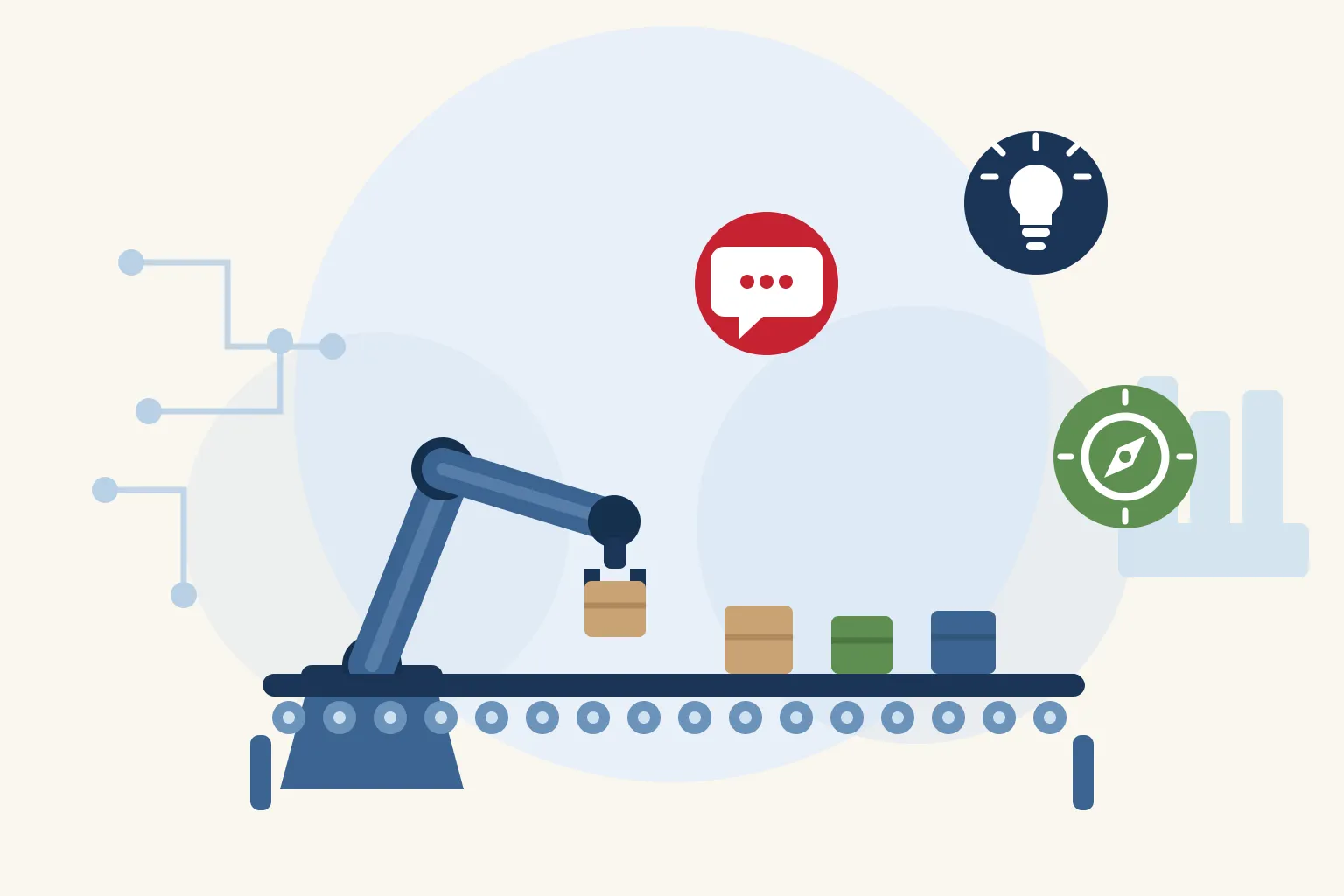
Walk a plant floor today and you’ll see how much has changed. Vision systems catching defects no human eye would register. Robotic arms handling palletizing that used to take a crew. Systems that flag maintenance issues before they turn into downtime. For young professionals entering packaging and processing, it’s natural to wonder where that leaves you. The answer is probably not where you’d expect. As more technical work gets automated, the skills that become scarce aren’t the technical ones. They’re the human ones.
Consider what automation doesn’t do well. It doesn’t read aroom when a customer is frustrated but hasn’t said so directly. It doesn’tnotice that an operator who’s been quiet all week might be the person who knowsexactly why the line keeps stopping. It doesn’t decide which problem is worthsolving in the first place. Those judgment calls still belong to people, andthey’re getting more valuable as everything around them speeds up.
Empathy is a good example. The professionals who move thingsforward are usually the ones who understand what a decision feels like fromsomeone else’s seat. They know an operator’s resistance to a new system oftencomes from having been burned by the last one, and they take that seriouslyinstead of dismissing it.
Creativity matters for similar reasons. Automation isexcellent at optimizing within a defined problem. It’s much weaker at askingwhether the problem is framed correctly. Should this product be packaged thisway at all? Is there a material nobody’s considered? Those questions come frompeople who are curious enough to challenge what already exists.
Then there’s purpose. This gets dismissed as a soft concept,but it shows up in practical ways. People who care about what they’re buildingstay long enough to develop real expertise. They notice things others overlook.In an industry where institutional knowledge takes years to accumulate, thatkind of investment compounds.
None of this means technical skill stops mattering.Understanding automation, data, and emerging technology is foundational, andyou should keep building it. But technical capability is increasingly the priceof entry rather than the differentiator. What separates people is how theyapply it, how they communicate, collaborate, and decide what deservesattention.
The encouraging part is that these aren’t fixed traits.Empathy grows from paying attention to people who work differently than you do.Creativity grows from exposure to problems outside your lane. Purpose usuallydevelops from spending enough time somewhere to care about the outcome.
The machines will keep getting better. That’s a good thing,and it will make this industry safer, more efficient, and more sustainable thanit has ever been. But someone still has to decide what’s worth building, andwhy it matters. That part was never going to be automated.