When most people think about career growth, they picture promotions, new job titles, or moving into management. While those milestones are certainly worth celebrating, one of the smartest investments you can make in your career often flies under the radar: cross-training.
The more you understand how different parts of the business work together, the more valuable you become - not just to your current team, but to your organization as a whole. In an industry as interconnected as packaging and processing, the professionals who can bridge the gap between engineering, operations, and commercial teams are often the ones who uncover new opportunities, solve problems faster, and emerge as future leaders.
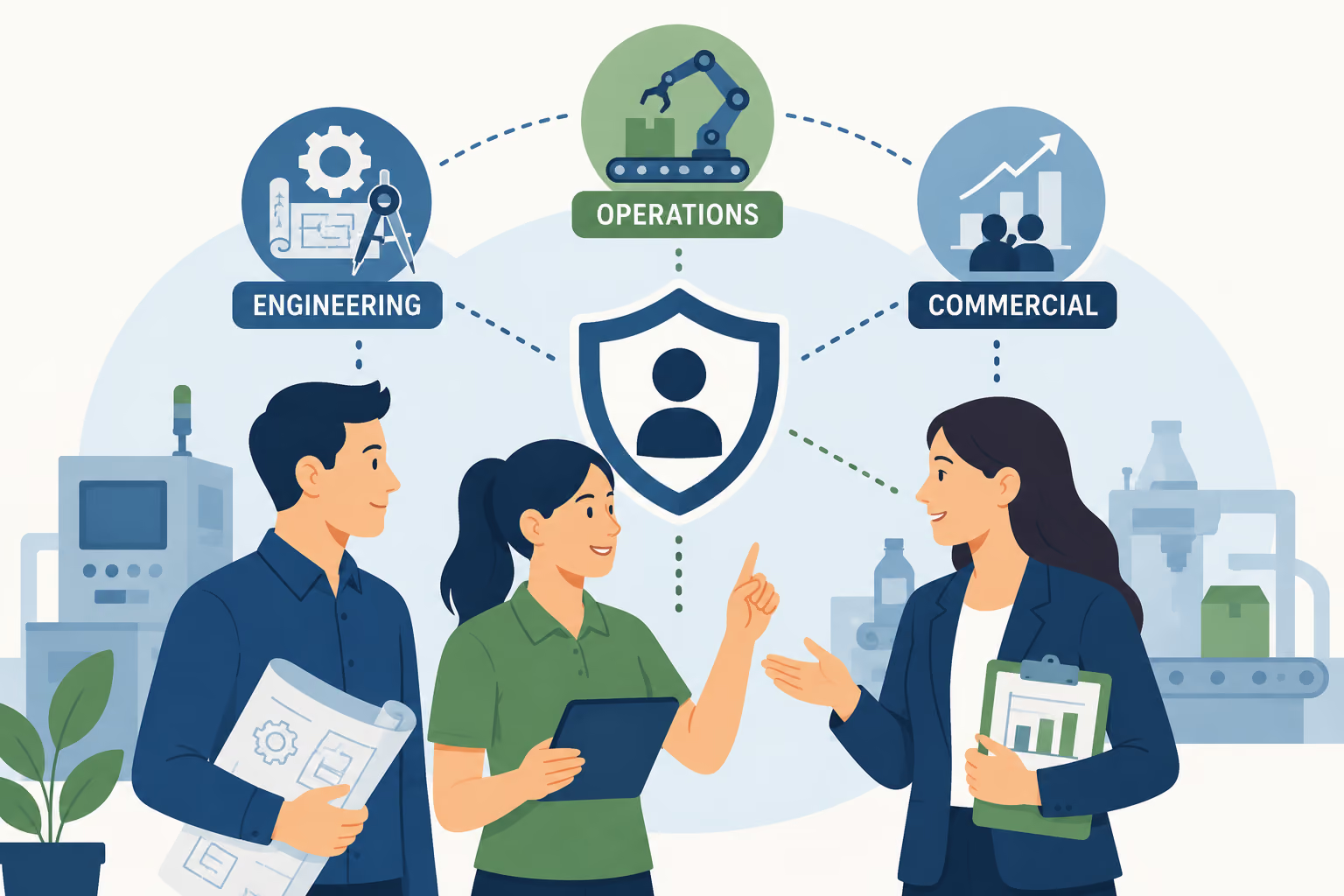
Think about it this way: engineers develop innovative solutions, operations teams ensure those solutions can be executed efficiently, and commercial teams help customers understand the value they bring. Each group has a different perspective, but they're all working toward the same goal. The more you understand each perspective, the better equipped you'll be to make informed decisions and collaborate effectively.
That's why lateral skill-building can be just as important as climbing the organizational chart. Expanding your knowledge across departments gives you a broader understanding of the business, helps you communicate more effectively with colleagues, and prepares you for opportunities that may not even exist yet.
The good news is that cross-training doesn't require changing jobs or waiting for a formal development program. Start by looking for opportunities within your current role. Volunteer for cross-functional projects. Ask to attend meetings outside your department. Spend time with colleagues in engineering, operations, sales, or customer service to better understand their priorities and challenges. Even informal conversations can provide valuable insights into how decisions are made throughout the organization.
Don't underestimate the power of curiosity, either. If you've ever wondered why a process works a certain way or how a customer ultimately uses the equipment or packaging you're helping create, ask. The professionals who continue to ask thoughtful questions often develop a deeper understanding of the business than those who stay focused solely on their own responsibilities.
For young professionals working in more traditional organizations, pursuing these opportunities may require a little initiative. Cross-training isn't always built into career development plans, so you may need to create those opportunities yourself. Let your manager know you're interested in broadening your experience, ask to shadow colleagues in other departments, or volunteer for task forces that bring multiple teams together. Most leaders appreciate employees who are eager to learn beyond the boundaries of their job description.
The added benefit? Cross-training builds confidence. When you understand how different functions contribute to the bigger picture, you're more comfortable speaking up in meetings, collaborating with colleagues across the business, and tackling unfamiliar challenges. Instead of seeing only your piece of the puzzle, you'll begin to understand how everything fits together.
In a rapidly evolving industry, your greatest career advantage isn't simply what you know today - it's how quickly you can continue learning. Titles will change throughout your career, but a broad understanding of the business will continue to open doors. By intentionally building skills across engineering, operations, and commercial teams, you're creating something even more valuable than your next promotion: a career that's adaptable, resilient, and ready for whatever opportunity comes next.